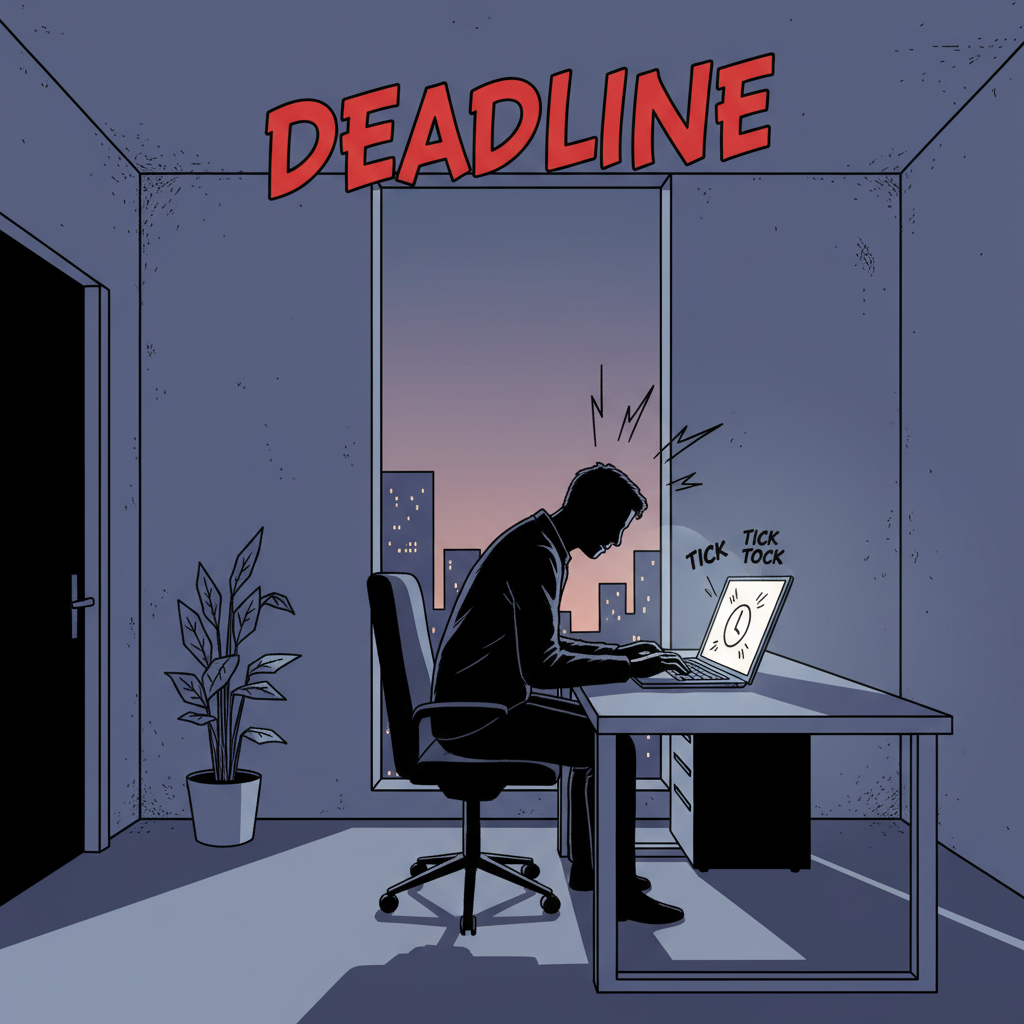
Micromanagement at work can begin with something as small as a lunch order.
A boss asked for chole puri. The request went to one person. That person passed it to someone else. The second person waited for the lift, even though it was only one floor. The food finally arrived late, cold, and wrong. Chole puri had become puri kurma. The quantity was wrong too: two pooris were needed, but two full plates came up instead. So the failure was not just about taste. It was also about delay, wastage, and poor resource optimization.
By the time the food reached the table, the real output was no longer lunch. It was irritation.
And the most important line in the whole episode was not said loudly. It was thought quietly: better I would have done it myself.
That is how many bosses begin their journey into micromanagement, not from ideology, but from repeated disappointment.
Small Failures Teach Fast
On paper, this looks trivial. A food order got mixed up. People got annoyed. Move on.
But small failures are how teams teach leaders what delegation really means inside the system.
When a leader gives a simple task to a team, they are not only assigning work. They are running a trust test. Will the team carry the instruction with judgment? Will they protect the outcome? Will they notice what matters without being told twice?
If the answer is no, the leader learns something immediately.
They learn that distance from execution is risky.
Once that lesson repeats across enough incidents, behavior changes. The boss starts checking details personally. Then they start cross-verifying. Then they stay closer to decisions that should have remained with the team. Eventually they are dragged into errands, clarifications, and avoidable recoveries, not because they enjoy control, but because the system has trained them to distrust delegation.
That is why small failures matter. They do not stay small for long.
That is also how micromanagement at work stops looking like a flaw and starts looking like protection.
Here Is What the Sequence Looks Like When You Slow It Down
This is where root cause analysis becomes useful, not as jargon, but as discipline.
The Lean Enterprise Institute's explanation of the Five Whys is simple: keep asking why until the symptom stops pretending to be the cause. That is exactly what this incident needs.
Here is what the sequence looks like when you slow it down.
Why did lunch fail?
Because the food arrived late, cold, and partly wrong.
Why did it arrive late?
Because a simple retrieval became a handoff, and the person bringing it chose the easy route, waiting for the lift rather than taking the faster stairs.
Why was the food wrong?
Because the order was not verified before leaving the counter. Item mismatch and quantity mismatch were allowed to travel upward unchecked.
Why did the frustration spread to everyone?
Because there was no single owner of the outcome, only a loose chain of participation. When ownership is blurred, blame becomes easy to distribute.
Why did the whole experience feel worse than the food error itself?
Because the desired outcome was never clearly protected. The system was organized around completing a task, not around preserving the experience of the person waiting for the meal.
Once you ask the whys in that sequence, the incident stops being about lunch.
It becomes a miniature case study in how institutions confuse task completion with success.
That is what good root cause analysis does. It prevents a noisy symptom from becoming the final explanation.
Task-Based Systems Produce Outcome Failure
This is the deeper analogy.
A task-based system asks: was the instruction carried out?
An outcome-based system asks: did the person receive what they actually needed, in the condition, quantity, and time window that made it useful?
Those are not the same thing.
In the lunch incident, the task was "bring food upstairs." That task was technically completed. Someone went downstairs. Something was collected. Something came back.
But the real outcome was more demanding: bring the correct food, in the correct quantity, fast enough that it is still worth eating, without unnecessary waste, confusion, or resentment.
The moment you define success too narrowly, the system begins rewarding the wrong behaviors.
Waiting for the lift becomes acceptable because movement has started. Not checking the packet becomes acceptable because collection has happened. Sending two plates instead of two pooris becomes acceptable because the system has not learned to think about fit, proportion, or resource optimization. Passing the task through two people becomes acceptable because nobody has explicitly been asked to own the outcome from beginning to end.
This is how weak systems hide inside ordinary days. The paperwork is done. The file moved. The message was sent. The meeting happened. The food came. And yet the outcome has quietly died somewhere in transit.
It is the same pattern I wrote about in Deep Work Culture Breaks When Visibility Becomes Performance. Visible completion is easy to observe. Useful completion is harder. Weak systems reward the first and feel confused when the second disappears.
How Micromanagement at Work Gets Built
Micromanagement at work is often described as a personality defect in the leader. Sometimes that is true. Some leaders genuinely cannot let go.
But that explanation is incomplete because it hides how systems create the behavior they later resent.
A boss who repeatedly sees delegated work come back late, wrong, unchecked, or under-thought does not experience that as theory. They experience it as operational risk. So they respond in the most natural short-term way possible. They move closer. They verify more. They ask again. They stop assuming judgment where judgment has not been demonstrated.
In isolation, each extra check looks reasonable.
In accumulation, it becomes micromanagement.
That is the mechanism by which micromanagement at work becomes a system habit rather than a temporary response.
The trap is obvious once it settles in. The boss becomes slower because they are now carrying detail that should have remained with the team. The team becomes weaker because it is now being supervised at the level of execution instead of developed at the level of thinking. Good people feel distrusted. Weak people learn to survive by waiting for instructions.
That is why micromanagement at work is often not the first failure in the chain. It is the second-order effect of earlier failures that nobody diagnosed properly.
This is also why weak teams sometimes help create the very boss they later complain about. When judgment is missing in small tasks, leaders stop trusting judgment in bigger ones. When that happens, people behave more like monitors than CPUs, in the sense I described in Are You a CPU or a Monitor?.
How It Becomes a Self-Fulfilling Prophecy
The real danger is not just that the boss starts checking more. The real danger is that the system starts reorganizing itself around that behavior.
A boss sees one avoidable mistake. Instead of correcting the process and coaching the exact failure, they begin hovering more closely over the person. The person notices the scrutiny. Confidence drops. Risk-taking drops. Attention gets split between doing the work and avoiding the boss's disappointment.
Then the quality of work often falls further.
Not always because the person has become careless, but because fear is a terrible operating system. When people start working under the assumption that every small mistake will be amplified, they become slower, more defensive, and less thoughtful. Some become anxious. Some stop taking ownership. Some quietly conclude that since the boss is going to review everything anyway, extra effort is pointless.
That is the self-fulfilling prophecy.
The boss reviews more because they think the team is unreliable. The team becomes more passive because the boss reviews everything. The work weakens because ownership weakens. Then the boss sees weaker work and feels even more justified in reviewing everything.
At that point, everyone can point to evidence and still miss the system.
This is where micromanagement at work becomes self-reinforcing rather than situational.
The boss thinks, I was right not to trust this. The team thinks, there is no point thinking ahead because everything will be checked, corrected, or criticized anyway. And slowly, what should have been extra attention at an early stage becomes a permanent full-time burden for the boss.
The tragedy is that the boss may even feel rational while this is happening. If the system cannot be trusted to run properly, then of course closer supervision feels justified. But the supervision itself is now part of the reason the system is no longer learning to run properly.
This is why self-fulfilling prophecies are so dangerous in management. They feel like realism from the inside.
And that is why micromanagement at work often survives even when nobody involved actually likes it.
Why Doing It Yourself Is Not a Real Solution
The boss's instinct, after enough moments like this, is predictable: next time I will just do it myself.
At the beginning, that may even look efficient.
It is not a scalable answer.
A boss cannot focus on the bigger picture, build systems, coach people, review performance, and still act as the backup operator for every small task that the team mishandles. The leader's job is not to personally rescue lunch orders, recheck every message, or shadow every execution path. The leader's job is to build a team and a performance management system in which outcomes are protected without constant intervention.
Gallup notes that managers drive 70% of the variance in team engagement. That matters here because once a leader starts treating every delegated task as suspect, the entire team's operating climate changes. Conversations become audits. Autonomy shrinks. Initiative falls. Distrust becomes ambient.
So the cost of one badly handled lunch is not just one bad meal. The bigger cost is the kind of boss it trains the system to produce.
That is why micromanagement at work should be diagnosed backward, from repeated execution failures to managerial overreach, not just forward from leader behavior alone.
What the System Should Improve
If the goal is to reduce micromanagement at work, telling leaders to "trust more" is not enough. Trust follows evidence, and evidence follows design.
First, put one person in clear end-to-end ownership.
A simple task should not casually move from one person to another unless the handoff is necessary and explicit.
Second, define the outcome, not just the action.
The instruction was not "go downstairs." It was "ensure the right meal reaches the table in the right quantity, fast enough to matter."
Third, reward judgment in execution.
Waiting for the lift for one floor is a small but revealing example of easy-path thinking replacing outcome thinking.
Fourth, add a verification step before closure.
Check the item. Check the quantity. Check the condition. Two seconds of verification would have prevented delay, mismatch, and waste together.
Fifth, treat quantity errors as system errors, not tiny mistakes.
Two pooris and two plates are not close enough. Over-allocation is also failure. Good systems protect resources, not just completion.
Sixth, stop scolding the whole chain.
Blanket blame teaches politics, not accountability. Diagnose precisely. Correct precisely.
Seventh, use repeated incidents as performance-management data.
If the same kinds of avoidable mistakes keep happening, the answer is not for the boss to do everything personally. The answer is to redesign clarity, expectations, and ownership.
Eighth, separate correction from fear.
When someone makes a mistake, correct the mistake clearly and early. Do not let the person slowly absorb a background sense that they are now permanently under suspicion. Precise coaching improves work. Ambient fear degrades it.
Ninth, review less by default, but review better.
Leaders do need to inspect work in the early stages. But the point of review is capability-building, not indefinite dependence. Review should narrow over time as judgment improves, not become a permanent substitute for judgment.
Tenth, make ownership visible again.
If people believe the boss will check everything anyway, they will stop checking it themselves. So systems need explicit signals that first-pass quality still belongs to the owner, not to the reviewer.
Eleventh, protect the boss from becoming the system.
If one person's constant vigilance is the only thing holding quality together, then there is no system, only heroic compensation. The fix is not more heroism. The fix is a stronger operating model.
Micromanagement at work is often discussed as though it begins with a leader's obsession with control. Sometimes it does. But just as often, it begins with ordinary operational disappointment.
If you want bosses to stop interfering in every detail, do not begin with a speech about empowerment. Begin by building a team that can handle chole puri without turning it into puri kurma, delay, wastage, blame, and distrust. Delegation becomes safer when execution becomes thoughtful.
That is the real lesson inside this story. The food was wrong. The route was wrong. The quantity was wrong. The blame was wrong. And from those small wrongs, a larger organizational habit began to make sense. That habit is micromanagement.
The final danger is that once the habit hardens, everyone starts producing the evidence that seems to justify it. That is when a management style stops being a reaction and becomes a self-fulfilling prophecy.
That is also the moment when micromanagement at work becomes hardest to reverse, because it now feels supported by daily proof.
Ameya Agrawal is an IIM Kozhikode Gold Medalist, Presidential National Award recipient, and Forbes contributor. He serves as Strategy Manager at MIT World Peace University (MIT-WPU), Pune, where he leads the launch of WPU GŌA, India's first transdisciplinary residential university. He is the founder of SkillSlate, a community of 25,000+ members, and publishes open-source tools on GitHub. Follow him on LinkedIn, Twitter @ameyaagrawal, and at blog.ameya.page | GitHub



Leave a Reply